Booking Widgets Versus Marketplace Listings
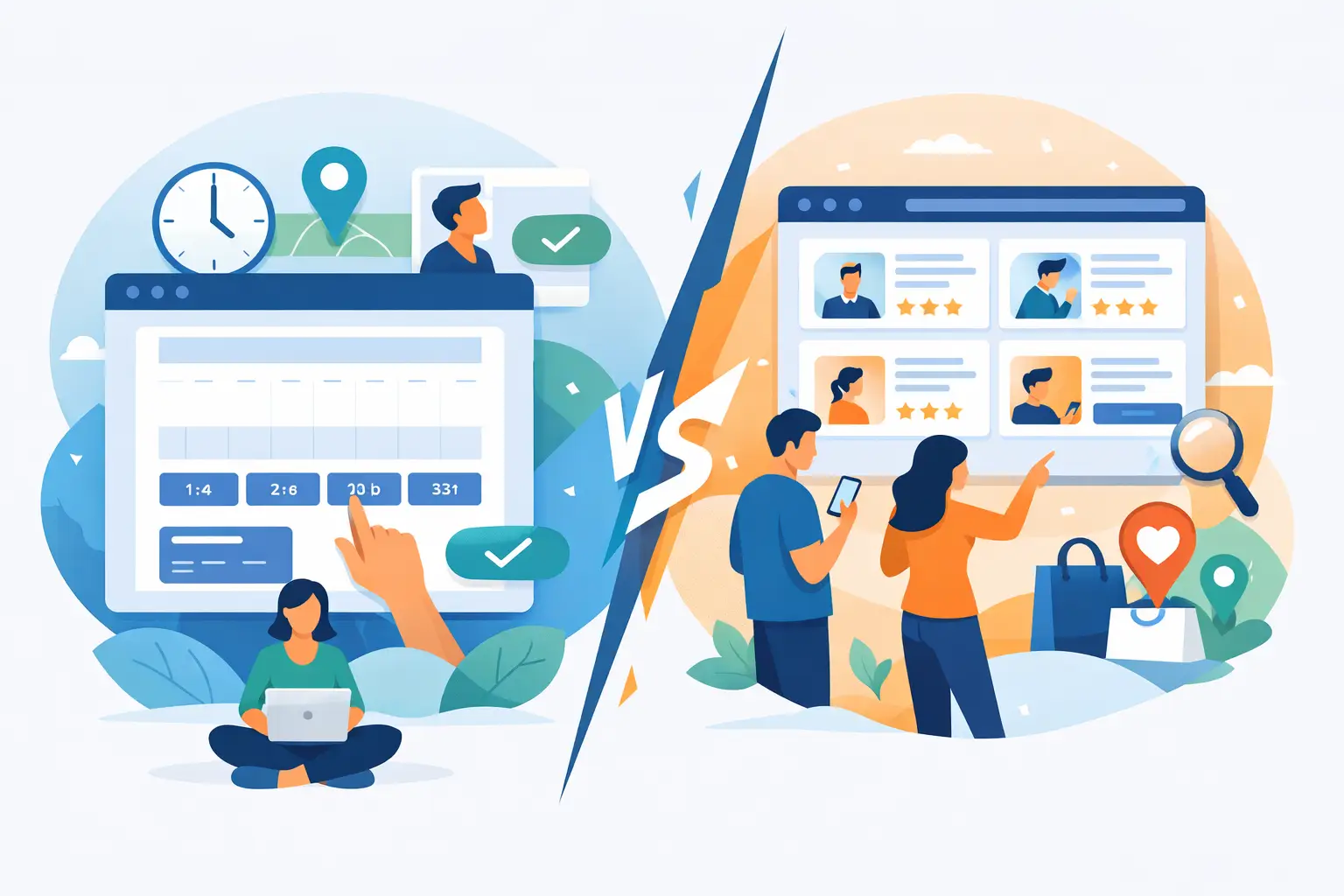
A fully booked Saturday can hide a costly problem: who owns the customer relationship after the appointment? When comparing booking widgets versus marketplace listings, that question matters as much as how many new appointments each channel brings in. One puts your business, brand, and booking flow at the center. The other puts you in front of people who may not have known you existed.
For salons, spas, clinics, and wellness businesses, the strongest answer is rarely choosing one channel forever. It is understanding what each one does well, what it costs beyond the advertised fee, and where it belongs in your operating plan.
What a booking widget does for your business
A booking widget is an online scheduling tool placed on your own website, booking page, social profile, or digital marketing campaign. A client sees your business, chooses a service and team member, selects a time, and books directly with you.
The main benefit is control. You set the presentation, service menu, availability rules, booking policies, intake questions, deposits, and customer communication. The booking experience reflects your business rather than a directory of competing providers.
That control also improves daily operations. Direct bookings can flow into one client record alongside appointment history, notes, payments, cancellations, preferences, and campaign activity. Your front desk does not need to piece together details from separate systems before a client arrives.
A booking widget is especially valuable for repeat customers. Once clients know and trust your business, they should not have to search a marketplace, compare you with competitors, or navigate a third-party experience just to schedule their next visit. A simple direct path reduces friction and protects the relationship you have already earned.
Where widgets require more effort
A widget does not create demand on its own. If your website receives little traffic and your social channels are quiet, a direct booking page can be well designed but underused. You need to support it through local search visibility, referrals, social content, email or text campaigns, and a clear call to book wherever clients encounter your brand.
This is not a reason to avoid direct booking. It is a reason to treat it as business infrastructure, not a one-time website feature. Your booking page should be the destination for every marketing activity you control.
What marketplace listings do well
Marketplace listings place your business in front of people actively searching for a service in a specific location, often with the ability to compare availability, prices, reviews, and categories. For a new studio, a provider with open capacity, or a business entering a new neighborhood, that exposure can be useful.
A marketplace can act as a discovery channel. Someone searching for a massage this week, a last-minute haircut, or a local facial may find your business without ever visiting your website. If they book and have a strong experience, you have an opportunity to turn a first visit into a direct, repeat relationship.
Marketplaces can also help fill gaps in the schedule. Slow weekday afternoons, newly hired staff, and off-peak services are common areas where incremental demand has real value. An appointment that would otherwise remain empty may justify the commission or listing cost.
The trade-offs behind marketplace demand
The same comparison tools that help clients find you also make it easy for them to choose someone else. Your listing appears next to competitors, and price, promotions, ratings, distance, and immediate availability can carry more weight than your brand story.
Fees are another consideration. Depending on the marketplace model, businesses may pay commissions, subscription fees, promotional costs, or discounts designed to attract new customers. These costs need to be measured against the lifetime value of the client, not simply the revenue from the first appointment.
Data access can be limited, too. You may receive only the information needed to fulfill the booking, while the marketplace retains control of its audience and its marketing relationship. That makes it harder to build targeted follow-up campaigns or understand the full path from discovery to repeat visit.
Booking widgets versus marketplace listings: the real decision
The practical question is not which channel has more bookings this month. It is which channel creates profitable, repeatable revenue without adding operational complexity.
A direct widget tends to win on margin, brand ownership, client data, and retention. A marketplace tends to win on immediate reach, particularly when people are searching with clear intent. The right mix depends on your current business needs.
If your appointment book is already active and most clients return regularly, prioritize the direct experience. Make your booking page easy to find, easy to use on mobile, and consistent with your service policies. Use reminders and rebooking prompts to bring clients back through your own channel.
If you have unused capacity, limited local awareness, or a newer team member who needs clients, a marketplace may be worth testing. Give it a defined role rather than allowing it to become your default booking system. For example, use it to attract first-time clients for selected services and times, then evaluate whether those clients become profitable repeat customers.
Measure the channels beyond appointment volume
A marketplace that sends 30 appointments can look more successful than a widget that sends 20. But raw bookings do not tell you whether either source is helping the business grow.
Track the source of each appointment and review the results over time. Look at first-visit revenue, discounts or commissions paid, no-show rate, rebooking rate, average spend, retail purchases, and client retention. A channel that produces fewer bookings but higher-value repeat clients may be the better investment.
You should also measure the operational impact. Does the channel create manual work for the front desk? Are staff schedules updated automatically? Do client records remain complete? Can you send post-visit messages, request reviews, and run campaigns from the same customer data?
This is where an all-in-one platform matters. CleverBooking helps businesses connect branded online booking with CRM, payments, staff schedules, campaigns, and analytics in one dashboard. The goal is not just to accept an appointment. It is to make every appointment easier to manage and more likely to lead to the next one.
Questions to ask before committing budget
Before adding a marketplace or investing more in direct booking, ask four practical questions:
- Can clients book, pay, and receive reminders without calling the front desk?
- Do we know what each acquired client costs and what they spend over time?
- Can we market directly to clients after their first visit?
- Are we using slow capacity strategically, rather than discounting our best appointment times?
Your answers reveal whether a channel is supporting a healthy operating model or simply creating more activity.
Build a channel plan that protects direct relationships
The most effective approach is often a simple funnel. Use discovery channels, including marketplaces where appropriate, to introduce new people to your business. Then deliver a service experience that gives them a reason to return. At checkout and in follow-up communication, make your direct booking page the natural place to schedule next time.
That does not mean pressuring clients or treating marketplace customers differently. It means making rebooking convenient and showing the consistency of your brand. A client who has a preferred provider, saved service history, relevant reminders, and an easy booking link has little reason to start their next search from scratch.
Keep your best availability strategy in mind as well. Many businesses reserve prime appointments for established direct clients while using selected openings to attract new demand. The policy should fit your capacity, team goals, and local competition. A high-demand clinic may have little need for marketplace exposure, while a new salon may benefit from it for a limited period.
The channel that matters most is the one you can manage, measure, and turn into lasting client relationships. Use marketplaces for visibility when visibility is the constraint. Build your direct booking experience for everything that comes after the first appointment.